

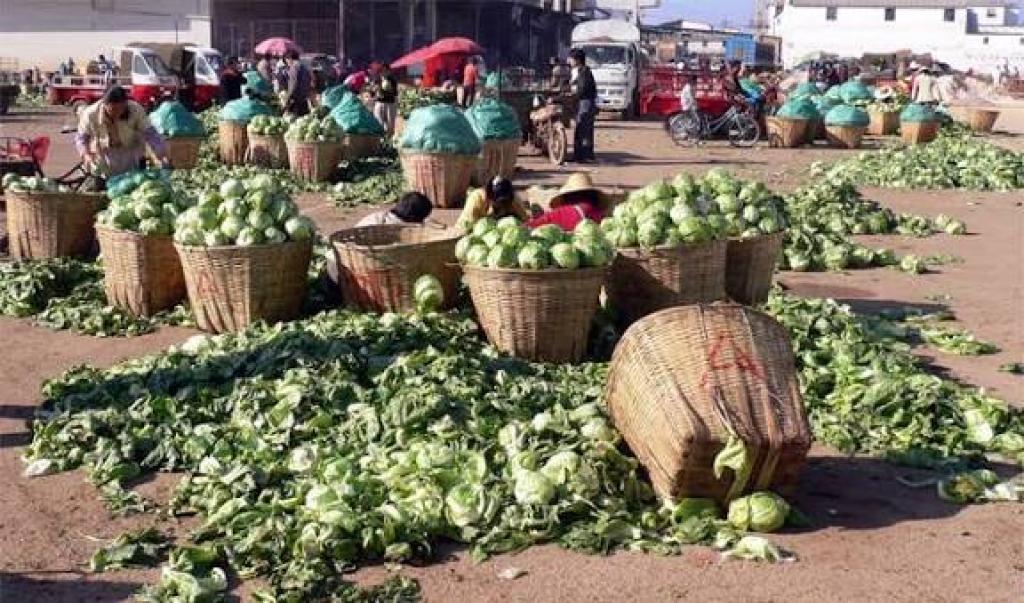
A Horticulturist, Mrs Oluwafolakemi Omidiwura, says Nigeria loses up to 40 per cent of its fruits and vegetables to post-harvest losses.
Omidiwura, a lecturer in the Department of Crop and Horticultural Science, University of Ibadan, in an interview with newsmen in Ibadan, attributed the losses to poor handling as well as inadequate transportation and storage facilities.
The don defined post-harvest loss as the reduction in quantity and quality of farm produce from the time of harvest to the point of consumption.
“A lot happens after harvest, including packaging, transportation, marketing and processing. As time progresses, the quality of the produce begins to decrease and deterioration sets in,”Omidiwura said.
According to her, fruits and vegetables are particularly vulnerable because of their high moisture content and perishability.
“As soon as fruits and vegetables are harvested, they continue to respire. During this process, stored food components begin to break down.
“By the time you harvest today and leave them on the shelf for 24 hours, depending on the variety and temperature, they may no longer be as firm or fresh as before.
“If, however, left longer, they may not be safe for consumption,”she said.
Omidiwura attributed the high rate of losses in Nigeria to poor infrastructure, especially bad roads, lack of proper packaging and inadequate storage systems.
She said that farmers often transport produce in baskets, sacks or overloaded trucks, exposing them to heat, compression and vibration over long distances.
“These fruits are compressed together and carried over bad roads. They are exposed to heat and rough handling. By the time they get to the market, significant damage has occurred.
“In the markets, they are often displayed in heaps under the sun. You can even perceive the odour of rotting produce, which indicates substantial losses,”she said.
The don said the situation contributed to high food prices, noting that although Nigeria ranks among the largest producers of some crops in Africa and globally, much of the produce does not get to consumers at the end.
On the use of chemicals to prolong shelf life, Omidiwura warned that some preservatives and pesticides used before and after harvest have adverse effects on human health and the environment.
She said that current research was focusing on safer and cost-effective alternatives, including natural products with antimicrobial properties and storage structures that do not depend on electricity.
“Cold storage is effective worldwide, but Nigeria’s power supply challenges limit its use.
“That is why research is ongoing into alternative storage systems such as evaporative cooling structures that do not require electricity and are suitable for small holder farmers, including women,”she said.
Omidiwura acknowledged the existence of government policies and research institutes mandated to address food preservation and storage, but stressed that implementation remained weak.
“I believe there are policies in place and institutes with mandates for food preservation and processing. However, the major challenge is effective implementation,”she said.
The horticulturist also said that the activities of middlemen could compound post-harvest losses due to poor handling, transportation and market practices.
“The way produce is transported, packaged and displayed for sale contributes significantly to losses.
“Sometimes, traders insist on selling already deteriorating stock before offloading fresh supplies, leading to further spoilage,”she said.
Omidiwura called for improved infrastructure, better handling practices, adoption of alternative storage technologies and stronger policy implementation to reduce post-harvest losses and enhance food security in the country.