

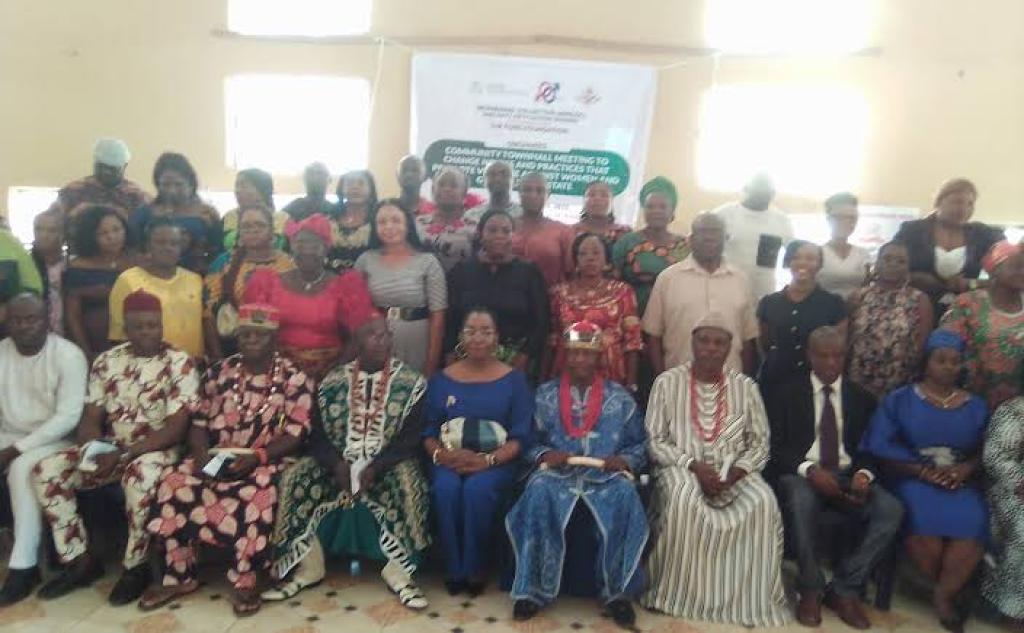
The Global Health Awareness Research Foundation (GHARF) has decried increasing rate of Gender Based Violence (GBV) in Ikem Community in Isi-Uzo Council Area of Enugu.
The Executive Director, Prof. Obioma Nwaorgu, raised the concern on Wednesday at the opening of a six-day capacity-building training for Christian women and women leaders of culture in Ikem Community on prevention and response to GBV.
Nwaorgu said findings from preliminary community assessments revealed that domestic violence, especially wife battering and abandonment remained the most prevalent form of abuse in the community.
According to her, GBV is rooted in unequal power relations, religious misinterpretations, and deeply entrenched patriarchal norms.
“Its consequences destabilise families, weaken community cohesion, and hinder national development,” she said.
She said that, while GBV cases appeared more visible within community settings than in churches, both religious and traditional institutions must work collaboratively to confront the problem.
The executive director stressed that GBV required urgent grassroots action, describing the menace as a direct threat to families, faith institutions, and community development
“This training is about strengthening a movement that places women at the forefront of justice, dignity, and transformation. Together, we can build a community where violence has no place.
“The initiative underscores GHARF’s commitment to promoting gender-responsive leadership and strengthening grassroots structures to ensure safer families and a more peaceful society in Ikem and beyond,” she said.
Nwaorgu said that the programme was funded by the Women Aid Collective, as part of a Two-Year National Initiative currently being implemented in 11 states across Nigeria
In his goodwill message, the Chairman of the programme and Isi-Uzo Traditional Ruling Council, Chief Igwe Okey Ogbodo of Ikem Uno Community, described marriage as a divine institution that must be protected from violence.
According to him, marriage is the only institution made by God, while other institutions are man-made like universities and factories and because God instituted marriage, He hates divorce.
“Most children from violent or broken homes grow up without proper direction. It is always better for husband and wife to live in peace and harmony by all means,” he advised.
The traditional ruler commended GHARF for bringing the sensitisation programme to Ikem and called for collective action.
“All hands must be on deck in fighting gender-based violence at all cost. If families live in peace, automatically the society will be peaceful,” he noted.
The Women Leader of the Christian Association of Nigeria, Isi-Uzo Chapter, Mrs Chukwuemeka Josephine, described the training as timely and empowering.
“Here in Ikem, we have heard about GBV, but we lacked support to move forward due to poor finances. Now we have people we can beckon on any time, any day,” she said.
She praised Nwaorgu for her commitment to women’s rights and capacity building, advising women not to suffer in silence.
“Any woman facing GBV should not pretend, but speak out to the necessary authorities for help. Do not hide in shame trying to protect your marriage. You might die in that process,” she warned.
A participant, Mrs Celestina Odo described the training as an eye-opener.
“Gender violence in this village is too much. I am a victim and had endured years of physical abuse in spite of being the breadwinner of my family.
“My husband would beat me at every opportunity, sometimes with bottles and knife. I pay the bills and took care of the children, yet he never appreciated it,” she recounted.
Nkechi said she eventually made the difficult decision to leave the marriage for the sake of her life and her children.
She said that the knowledge gained from the training would enable her to guide other women facing similar challenges.
The training will run from Feb. 16 to Feb. 21, while the beneficiaries will be equipped with practical tools for GBV prevention and response.