

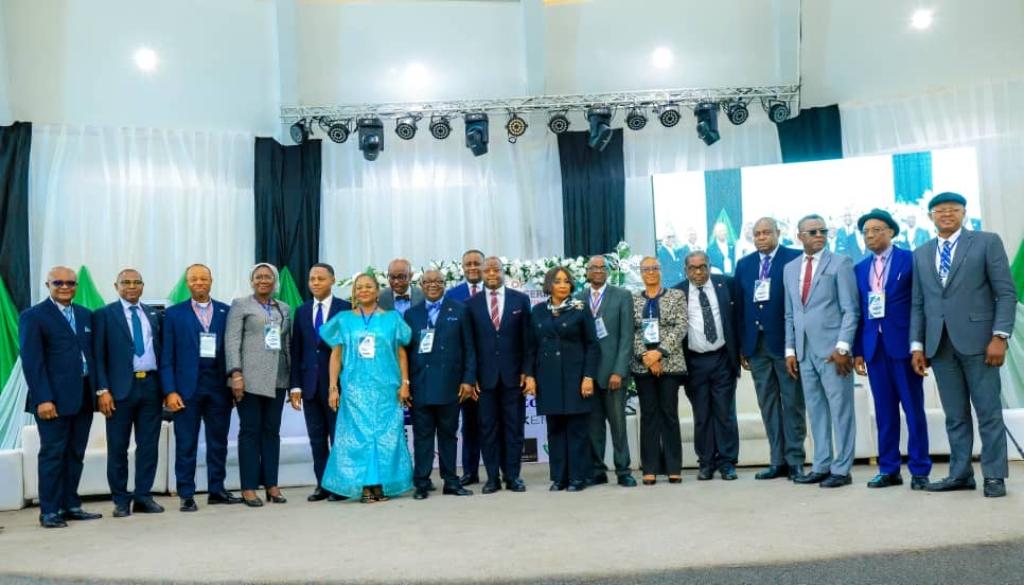
Some stakeholders in arbitration and mediation have urged Nigerians to embrace Alternative Dispute Resolution (ADR) to manage and handle their disputes.
They made the call during ADR Colloquium organised by College of Arbitrators Nigeria on Wednesday in Enugu with the theme: “Rethinking Dispute Resolution in a Modern Society – Going Back to Our Roots”
Speaking at the event, the President of the college, Mr Patrick Ikwueto, SAN, said the event was to create awareness on ADR to practitioners and stakeholders in the South-East.
He emphasised the need for individuals especially those at the grassroot to return to the indigenous ways of resolving disputes without recourse to court.
According to him, if we promote indigenous means of resolving disputes, the society will be better for it as we will live in more harmony and forge better progress.
“By choosing the theme, it is our aim to use this maiden colloquium to engage in various discourse showing that management and efficient resolution of disputes have always been embedded in our African System of living.
“I need not emphasis that disputes, disagreement or conflicts whether inter personal or large scale communal conflicts have existed even in our nascent societies,” he said.
Ikwueto added that aside from huge cost involved in litigation, court judgement often lead to hatred and bitterness especially when the loser is not happy with the outcome.
“This is the reason why the College of Arbitrators in keeping with our mandate and obligation will continue to provide specialised trainings on ADR as a viable platform for efficient and effective management and resolution of conflicts and dissputes,” he stressed.
Gov. Peter Mbah of Enugu State also said that ADR was no longer “alternative” but essential as it act as the bridge between justice and peace, law and equity, courtroom and the community.
Mbah, represented by his Special Adviser on Legal Matters, Mr Osinachi Nnajieze, added that before colonial legal systems took root, “our ancestors had robust mechanisms for resolving disputes”.
“These systems were restorative rather than punitive, communal rather than adversarial mediated by elders, chiefs, and trusted voices anchored on values of reconciliation, truth-telling, and restitution.
“While ADR offers immense promise, it faces real challenges such as lack of awareness and trust among citizens, limited institutional support, funding and overlapping jurisdictions between customary and statutory systems.
On her part, the Chairman, Arbitration and ADR Commission, International Chamber of Commerce (ICC), Mrs Dorothy Ufot, SAN, noted that where disputes were settled by community heads brings enduring peace.
According to her, after settlement, there is mutual understanding and respect as parties involved would shook hands live peacefully without bitterness.
She explained that matters that could take many years in court to decide can be settled amicably through ADR within a very short period of time.
“In business, by the time litigation is concluded in a case that one party borrowed money from bank, interest must have doubled. This is why we are advocating for ADR,” she said.
The Justice of the National Industrial Court, Owerri Division, Justice Nelson Ogbuanya, while emphasising the importance of ADR, warned that if left unsupervised would lead to trial and error.
“It will be like traditional medicine, where you don’t have the gauge prescription or the dose,” he said.