



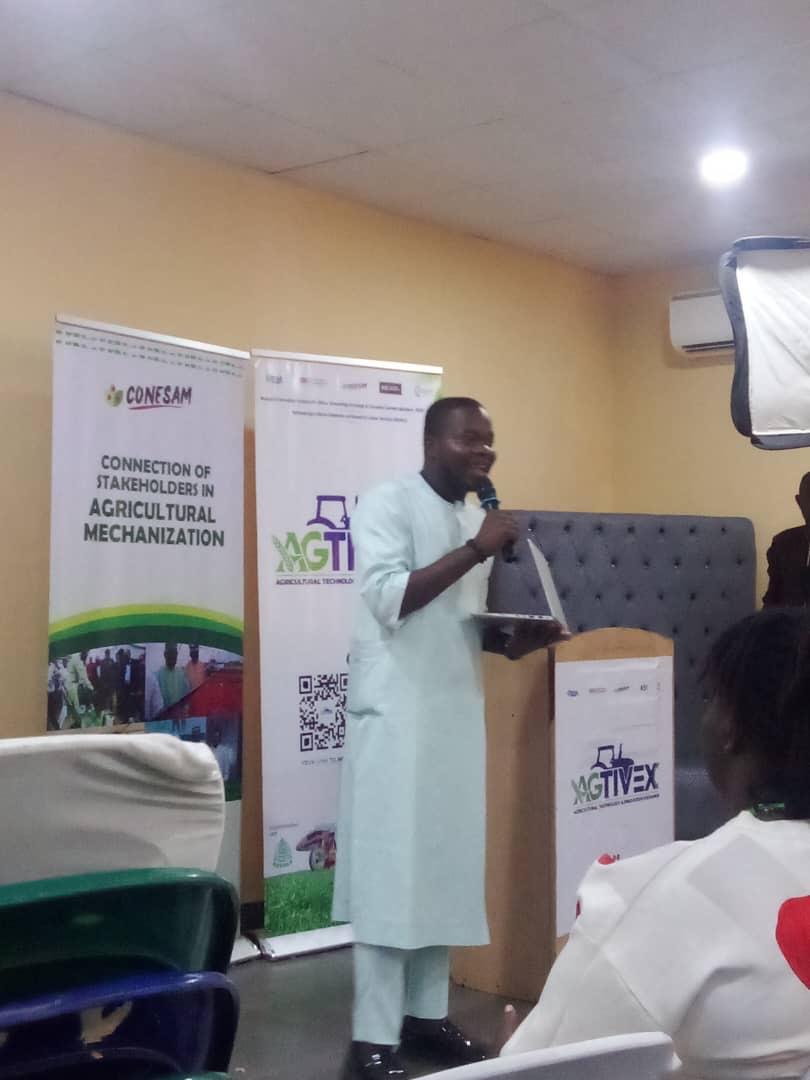
Young innovators, agro entrepreneurs and key players across Nigeria’s agricultural sector convened in Enugu on Wednesday for the Youth in Agri-Tech: Innovation to Wealth Creation programme, an initiative aimed at accelerating the adoption of technology-driven solutions in the country’s growing agri-business landscape.
The event took place at Hackathon Africalab, Enugu Chamber of Commerce (ECCIMA) Complex, Garden Avenue, Enugu.
The forum, organised under the Research Innovation Systems for Africa – Knowledge Exchange & Cascaded Commercialisation (RISA–KECC) programme in partnership with the National Agricultural Extension and Research Liaison Services (NAERLS), forms part of broader national efforts to reposition agriculture as a technology-enabled, youth-led enterprise capable of boosting food security, enhancing productivity and creating wealth.
Delivering his keynote address, Dr. Terseer Nyulaku underscored the urgency of injecting modern technology into Nigeria’s agricultural value chains.
He noted that for the country to meet rising food demands and compete in regional markets, farmers must adopt improved processing methods, strengthen post-harvest preservation systems and embrace research-led innovations.
He added that the collaboration with NAERLS is designed to build capacity for young agro innovators and deploy extension services capable of transforming traditional farming practices.
RISA–KECC South Programme Coordinator, Teddy Eragba, highlighted four core pillars required to drive youth participation in agri-tech: digital visibility, youth-focused engagement, technical upskilling and platforms for showcasing innovation.
He urged participants to see agriculture as a globally competitive field where creativity, data-driven solutions and strategic market intelligence are essential for success.
According to him, Nigeria’s agricultural sector holds enormous opportunities for young people willing to embrace technology.
In a presentation focused on sustainability, agro entrepreneur AniOko Anthony explored the concept of zero waste agriculture, explaining that materials commonly discarded on farms can be converted into valuable raw inputs for processing.
He identified cost efficiency, environmental responsibility and resource optimization as key factors for boosting profitability, especially for smallholders seeking to navigate rising costs of production.
Also speaking, Chineyere Oluchukwu emphasised the wealth creation potential embedded in Nigeria’s everyday local crops. She identified hibiscus, popularly called “red gold” as one of several commodities with expanding global demand when processed into teas, flavourings and wellness products.
She added that bitter kola, ginger, cassava, and even back-peeled oranges can become profitable products once value addition, good packaging and market research are prioritised.
Oluchukwu advised young entrepreneurs to start small, maintain strict quality standards and innovate consistently across their production lines.
On access to finance, Adanma Chinyere, CEO of Spar Venture, addressed the persistent challenges agro-MSMEs face in securing grants.
She highlighted poor documentation, weak business structure and late applications as recurring issues limiting their success.
Chinyere urged enterprises to build strong administrative systems, keep updated records and monitor grant announcements actively.
She noted that opportunities such as the Africa Agri-Food Development Programme (AADP) and the MassChallenge Sustainable Food Challenge remain open avenues for young innovators across Nigeria seeking expansion funding between 2025 and 2026.
Agribusiness expert Kenneth Eze provided practical insights on turning small and medium-scale farms into commercially viable ventures.
He called for improved market research, crop selection based on demand and enhanced value addition strategies.
Eze stressed that credibility demonstrated through transparency, consistency and documented performance is central to attracting investors and accessing finance, especially in an era where traceability and food safety are becoming global standards.
The Enugu Agri-Tech Mashup forms part of a wider national movement recognising young people as central to the future of African agriculture. With Nigeria seeking to reduce food imports, strengthen food security and increase agricultural exports, the forum reinforced the message that technology, innovation and entrepreneurship are critical to unlocking new wealth pathways across the country’s food and agribusiness sectors.
Organisers say the initiative will continue across various regions, targeting the next generation of Nigerians who are poised to transform agriculture from subsistence-based activity into a modern, technology-enabled and globally competitive enterprise.